CREW LIFE / CABIN CREW CLASS
Good Ideas Deserve to Be Heard: Why Public Speaking Matters
You know what you want to say. Then everyone turns towards you, and the words suddenly feel out of reach. Public speaking gives us a way to practise moments like this, so our ideas, experience and consideration for others come through more clearly.
Sources and editorial scope
We need these skills long before we step onto a stage
Picture introducing yourself to a new community, explaining a proposal in a meeting or offering a view in a discussion. The room may be small, but you still need to choose your words and help other people understand. Skills developed through public speaking practice can carry into these professional conversations.
For aspiring cabin crew, a short introduction is also a chance to explain who you are. An interesting experience becomes easier to follow when you describe your role, the action you took and what you learned. Start with something you have actually done, including experiences from school, community activities or previous work.
An idea becomes easier to follow when it has direction
Toastmasters recommends an opening, main points and a summary, followed by rehearsal with a timer. You can use that simple principle to decide on one message you would like your listener to remember.
Compare an introduction listing personal qualities with a concrete story. Here is a practice example: “I helped organise a campus event. When the registration queue grew, I worked with the team to explain the entry routes so participants knew where to go.” There is a situation and an action the listener can picture. Replace it with your own experience; this sample is not an interview answer to memorise.
Communication has a concrete place in cabin crew preparation
Emirates explains that assessment-day group activities give candidates an opportunity to demonstrate teamwork, communication and problem-solving. This is one airline's official example of communication in selection, rather than a scoring formula for every airline.
For practice, imagine your group needs to choose an activity. Offer one suggestion with a reason, then invite others to respond. You could try: “I suggest this option because we have enough time for it. What does everyone think?” You are practising how to make a contribution while giving the group space to think together.
A calm speaking style can be your starting point
If you prefer speaking gently and taking a moment before answering, begin your practice there. Choose an opening sentence that feels natural and check whether your listener understands it. Different situations call for different energy. An introduction in a small room can feel warm and engaging through straightforward language.
Include listening in your practice. Ask a friend to share a view, summarise what you understood and check whether you heard them correctly. For example: “So timing is the part you are most concerned about?” This exercise asks you to respond to the substance of the conversation, keeping your answer connected to the person speaking.
Try 10 minutes of practice before the big opportunity arrives
Pick a small topic, such as a restaurant recommendation or a time you helped someone. Use the following exercise from CCC's editorial team as a first experiment. A phone and a few notes are enough; keep the recording for your own review.
- Minutes 1–2: decide who your listener is and the one thing you want to tell them.
- Minutes 3–4: write three prompts: situation, action and lesson. Avoid scripting every word.
- Minutes 5–6: record a story of around one minute, then listen to the whole recording once.
- Minutes 7–8: note a part that feels unclear. Choose one sentence to improve.
- Minutes 9–10: record again with that change. Compare whether your meaning is easier to follow.
Ask for feedback you can use tomorrow
After a friend hears your story, ask specific questions: “What do you think my main point was?” and “Where did you lose the thread?” Their answers give you material to revise. If they understood something different, check whether your introduction ran too long or your action needed a more concrete explanation.
Keep a small note with your topic, one piece of feedback and the change you want to try. Next time, use a different story to practise that same change. If evaluating yourself feels difficult, guided practice can provide room to experiment, receive comments and repeat with a clearer sense of direction.

If you want guided practice, start with your own needs
People arrive with different goals. Some want to organise their ideas while speaking, some are preparing for interviews, and others are still searching for words in English. At CCC, you can identify your immediate focus, then explore the program most relevant to what you want to practise.
Want to express ideas more clearly?
Public Speaking for Beginner offers three sessions covering speaking foundations, message structure, delivery and practice with personal feedback. It is a relevant starting point when your focus is how you communicate.
Preparing for a cabin crew interview?
Interview Preparation connects CV work, communication and answers with a one-on-one interview simulation. Explore it if you want practice in the context of a recruitment process.
Need stronger English foundations?
Essential English for Cabin Crew covers foundational English in instruction, service and cabin crew communication contexts. Consider this route when your main need is to develop your language foundations.
SOURCES & EDITORIAL SCOPE
Sources checked
Practical communication ideas from CCC's editorial team, with official Emirates recruitment context and an introduction to CCC's own programs.
Toastmasters International — Preparing a Speech
Advice on organising a message and rehearsing with a timer.
Checked:
Emirates Group Careers — Cabin Crew — assessment day FAQ
Communication, teamwork and problem-solving in Emirates group activities.
Checked:
Cabin Crew Class — Public Speaking for Beginner
Three-session program content: speaking foundations, message structure, delivery and personal feedback.
Checked:
Cabin Crew Class — Interview Preparation
CV preparation, interview answers and a one-on-one simulation.
Checked:
Cabin Crew Class — Essential English for Cabin Crew
English foundations in cabin crew instruction and service contexts.
Checked:
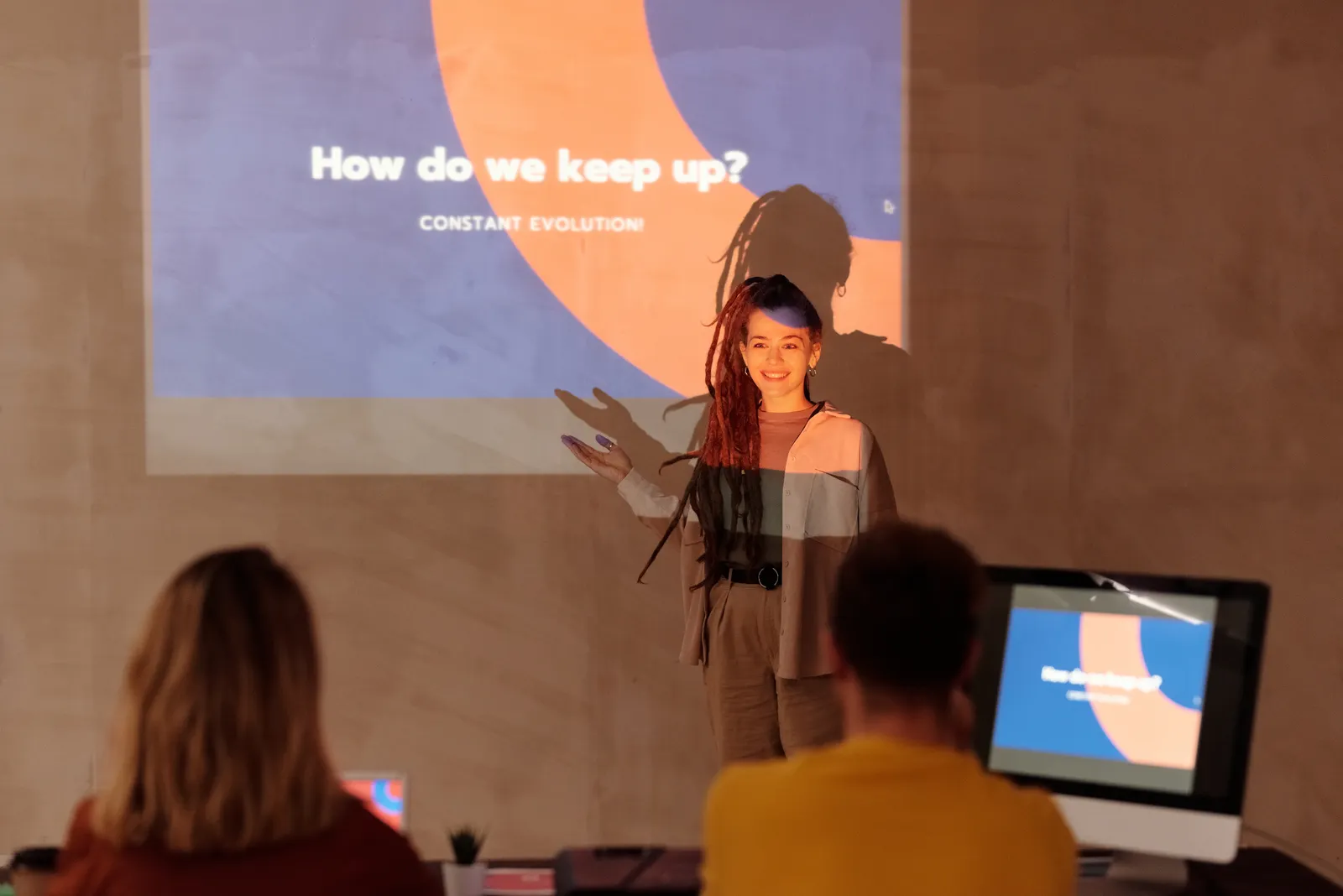
Pexels / Mikael Blomkvist — Smiling Woman Doing a Presentation
Source and credit for the presentation stock photo; it does not document a CCC event.
Checked:
Pexels / Alena Darmel — Colleagues Having a Business Meeting
Source and credit for the discussion stock photo; it does not document CCC participants.
Checked:
Pexels — Pexels License
Stock photo usage license and restrictions on implying endorsement by people pictured.
Checked:
Review policy: Reviewed every six months or when program information and official sources change. A source-check date is not a publication date or approval by a human reviewer.
NEXT STEP
Have something to say? Give yourself room to practise.
If you would like more guided practice, explore Public Speaking for Beginner at CCC. Read the curriculum and consider whether it fits what you want to develop right now.
Explore CCC's Public Speaking program