
SKINCARE & LIFESTYLE / CABIN CREW CLASS
Cabin Crew Skincare: What Women and Men Should Pack
From preparing for duty to getting back to your hotel, a compact skincare kit makes your routine easier to maintain while travelling. Women and men can start with five basics. These are personal packing priorities, rather than grooming requirements for every airline.
Sources and editorial scope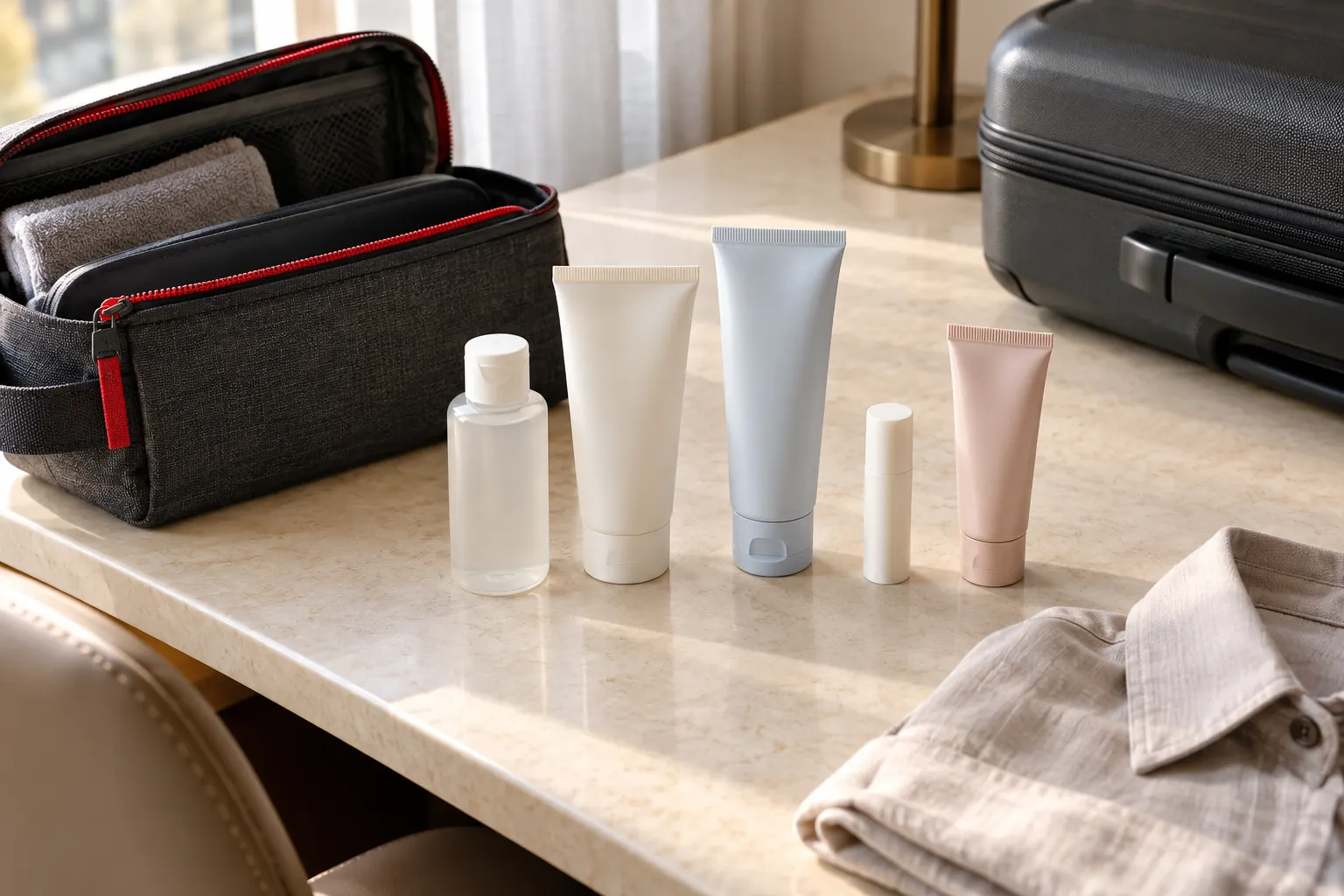
Why Think About a Travel Skincare Kit?
The UK Civil Aviation Authority explains that skin and lips can feel drier after a commercial flight because cabin air has low humidity. That sensation does not automatically mean your body is dehydrated. Experiences can also vary between people.
For cabin crew, a practical approach is to pack familiar products you can easily find in your bag. You do not need your entire skincare shelf. Leave room for items you actually use before leaving and while resting at base or in your hotel.
5 Skincare Essentials for Cabin Crew
Use this list as a starting point for checking your pouch. Choose sizes for the length of your trip and products your skin already tolerates. You do not need separate women's and men's packing lists: skin needs and everyday habits are more useful guides.
1 / Gentle cleanser
Pack a mild facial cleanser for your routine at base or in the hotel. AAD recommends using your fingertips and lukewarm water without scrubbing. Choose a small container you can close securely after use.
2 / Moisturizer
Moisturizer helps retain moisture. For dry skin, consider a fragrance-free cream. Apply after cleansing while skin is still slightly damp. Pack a familiar moisturizer with a texture that feels comfortable in your routine.
3 / Sunscreen
For daytime travel and outdoor activities, choose broad-spectrum, water-resistant sunscreen with SPF 30 or higher. Apply before going outside and reapply roughly every two hours outdoors, and after sweating or swimming. Follow the product's directions.
4 / Lip balm
Choose a lip balm that feels comfortable without stinging. A simple product such as petroleum jelly can be considered for dry lips. Stop using a lip product that burns or stings; that sensation does not mean it is working better.
5 / Hand cream
A small hand cream fits easily in your pouch. AAD recommends moisturizing after washing hands to help dry skin. Choose a comfortable texture and let it absorb before handling work equipment. Hand cream does not replace hand hygiene.
Choose for Your Skin, Rather Than a Gender Label
AAD notes that the basic elements of effective skincare remain the same for women and men, despite biological skin differences. A “for men” label or feminine packaging does not automatically establish suitability. Start with your skin's condition and how a product feels after use.
- Dry skin: prioritize a comfortable moisturizer and fragrance-free products.
- Acne-prone skin: look for non-comedogenic or oil-free labels on facial products.
- Sensitive skin: choose gentle formulas and stop using products that sting.
Optional Additions for Makeup and Shaving
Extra items follow your habits. Crew who wear makeup may need a remover; crew who shave facial hair need their shaving supplies. Neither should be treated as something every woman or every man must pack.
If you wear makeup
Pack a remover suited to your makeup. AAD recommends removing makeup, including eye makeup, before sleeping, then washing with a gentle cleanser. For acne-prone skin, check non-comedogenic labels and avoid scrubbing.
If you shave
Keep your usual shaving cream and razor in your layover supplies. Wet your skin and hair first, then shave in the direction of hair growth. Check airport restrictions on razors and aerosols rather than assuming every type is permitted in the cabin.
A Short Routine Before Duty, During a Break and After Flying
The suggested timings below are editorial examples to make your kit convenient, rather than airline operating procedures. Adjust them to your schedule, rest time and workplace rules. Personal care belongs in a safe moment when duties permit.
Before leaving
Do your basic routine at home or in the hotel: cleanse, moisturize, then use sunscreen if going outdoors during daylight. If wearing makeup, apply sunscreen first. Put your pouch somewhere easy to remember.
During an available break
Prioritize duties and hand hygiene. If lips or hands feel dry, small products can be used when duties permit. You do not need a lengthy skincare session in the cabin or to try unfamiliar products during work.
After duty or at the hotel
Remove makeup if worn, cleanse gently and moisturize. Reorganize your pouch and check remaining supplies for the next assignment. Choose a short routine you can maintain without cutting into rest time.
Packing Skincare in Hand Luggage
As one passenger-guidance example, Changi lists liquid, aerosol and gel containers of no more than 100 ml each, fitting in a transparent, resealable 1-litre bag. Its LAG examples include creams, balms, lotions and some cosmetics. Pay attention to container capacity, not just the amount remaining.
Before duty, check departure and transit airport rules alongside your airline's crew instructions. Changi's example is not permission for every route or evidence of a crew exemption. Carry medication or prescription products according to medical directions and applicable travel requirements.
- Prefer original travel-size packaging with clear labels and secure closures.
- Keep the skincare pouch separate from work supplies requiring quick access.
- Pack enough for the trip and keep backup supplies at base.
- Follow each product's storage instructions and expiry guidance.
Optional Extras and a Final Packing Check
Toner, serum, eye cream, face mist and sheet masks are outside this article's five packing priorities. Add them if you already use and tolerate them; you do not need to buy everything to build a travel kit. Treatment products follow personal needs or medical advice, rather than a layover trend.
Avoid adding multiple exfoliating products to chase results before duty. AAD warns that excessive exfoliation can irritate skin. If symptoms persist or worsen, consult a dermatologist so your routine can be tailored to your needs.
- Cleanser, moisturizer, sunscreen, lip balm and hand cream are packed.
- Makeup remover or shaving supplies are included if you use them.
- Products are familiar, containers secure and supplies sufficient.
- Liquid, baggage and grooming requirements for your trip are checked.
SOURCES & EDITORIAL SCOPE
Sources checked
General skincare guidance draws on AAD and flight context from the UK Civil Aviation Authority. Packing checklists and suggested timings are CCC's editorial advice. Choose products for your skin; duty, grooming and security requirements follow your airline and airports.
UK Civil Aviation Authority — Air travel and your health
Dry cabin air and the sensation of dry skin and lips after flying. Passenger guidance, rather than a study of every crew member.
Checked:
AAD — Face washing 101
Gentle facial cleansing, lukewarm water and avoiding scrubbing.
Checked:
AAD — Dermatologists' top tips for relieving dry skin
Moisturizer, fragrance-free products and hand cream after washing hands.
Checked:
AAD — How to apply sunscreen
Broad-spectrum, water-resistant SPF 30 or higher and reapplication when outdoors.
Checked:
AAD — 7 dermatologists' tips for healing dry, chapped lips
Non-irritating lip products and when persistent chapping needs dermatology advice.
Checked:
AAD — Skin care tips for men
Shared skincare basics, selecting by skin type and gentle shaving.
Checked:
AAD — I have acne! Is it okay to wear makeup?
Removing makeup before sleep and choosing non-comedogenic products for acne-prone skin. No acne treatment is prescribed here.
Checked:
AAD — Dermatologist-recommended skin care for your 20s
A consistent, adjustable routine, sunscreen before makeup and caution with excessive exfoliation.
Checked:
Changi Airport — Security & Baggage Restrictions
Changi's published passenger liquid, aerosol and gel guidance. Check your departure, transit and crew-specific rules separately.
Checked:
Review policy: Reviewed every six months, or sooner if the referenced skincare guidance or liquid restrictions change. A source-check date is not a publication date or approval by a human reviewer.
NEXT STEP
Build a travel routine that feels like yours
Continue reading about personal time, life at base and everyday crew habits in CCC Journal.
Read Travel & Lifestyle